
What a Franchise Actually Is (And Why It Works)
on
Before getting into ownership, investment, or opportunities, it’s worth stepping back and answering a simple question—what exactly is a franchise?
At its core, it’s a business arrangement where a franchisor gives someone the right to operate a business using their brand, systems, and support. In return, the owner pays a franchise fee along with ongoing royalties. That’s the basic definition, but it doesn’t really explain why franchising works the way it does or why so many people choose it over starting from scratch.
To understand that, it helps to look at how a franchise actually comes to be.
Let’s say someone starts a business—call it Tim’s Sandwich Shop. In the beginning, there’s no roadmap. Everything has to be figured out from scratch, from branding and location to suppliers and operations. It’s trial and error, and a lot of it. Over time, the business starts to gain traction. Customers come back, revenue grows, and the concept proves itself.
So the next question becomes whether that success can be repeated. A second location opens, and if that works too, it’s no longer a one-off success. At that point, the owner has a choice—continue opening and managing every location themselves, or build a system that allows others to own and operate the business using what has already been created.
That’s where franchising begins.
But getting to that point requires much more than just a successful business. Every part of the operation has to be tested, refined, and documented so someone else can follow it. What started as one business becomes a repeatable system, and that’s where the real value lies. Instead of starting from zero, a new owner is stepping into a model that has already been built and proven.
That’s why franchising is often described as a “business in a box.” Not because it’s easy, but because the blueprint already exists.
This is also where a common misconception comes in. Many people assume they need industry experience to be successful, when in reality that’s rarely the case. Franchise owners are not expected to do the job itself—they’re expected to run the business. The systems, training, and support are designed to teach everything else.
The real question becomes whether you can follow a proven plan, lead a team, and execute within a system that already works.
That’s the role.
The franchisor provides the roadmap, the tools, and the support, but the owner still has to implement it. It’s not about reinventing anything—it’s about doing the right things consistently.
Another advantage that often gets overlooked is the network. Instead of operating on your own, you’re part of a larger system with other owners who are facing similar challenges, sharing what’s working, and helping each other improve. That level of collaboration can make a significant difference, especially early on.
When you combine a proven system, ongoing support, and a community of other owners, it becomes easier to understand why franchising has such a strong track record. It’s still hard work, but you’re not starting from scratch, and that changes everything.
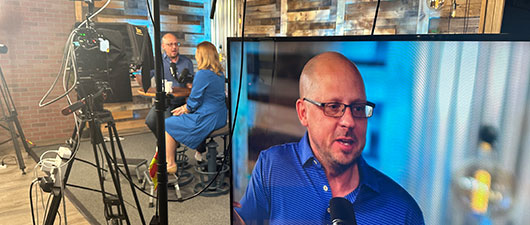
If you want to hear this broken down in a more conversational way, this was the focus of a recent episode of the Franchising 101 podcast, where the discussion walks through exactly how a business becomes a franchise and what that really means for an owner. It’s a helpful way to hear the concepts come to life beyond just reading about them.
If you’ve ever thought about owning a business but didn’t want to figure everything out on your own, franchising is worth a closer look.
And if you’re not sure where to start, that’s exactly what we help with at FranCoach. Once you understand how it actually works, the path forward tends to become much clearer.
Start With Understanding, Not Guessing
Franchise ownership is a big step—education makes it simpler.
🎙 Franchising 101 Podcast – Learn how franchising works
📺 FranCoach YouTube Channel – Hear real experiences
📖 Becoming a Franchise Owner (Book) – Break down the process
We’ll help you figure out what makes sense for you.